The project
The book, and the podcast, that ought to exist
Fifty-five women have been carried through a hundred and fifty years of history as a number attached to someone else. They deserve their names spoken, their lives told, and their own words read aloud. Todd Compton did exactly that for Joseph Smith's plural wives. We are looking for the people who will do it for these.
What these women have been left with, in four numbers.
- 55women sealed or married to him
- 15who left any words of their own
- 25with no portrait we could licence
- 0book-length biographies of the fifty-five
Three projects showed what this looks like
Todd Compton, In Sacred Loneliness (1997). A full biography of each of Joseph Smith's plural wives — her family, her conversion, her marriage, her later life, her own words where they survived. It changed the conversation permanently, because you cannot argue about a woman in the abstract once you have read four thousand words about her.
Brian C. Hales, josephsmithspolygamy.org. A free, public, heavily sourced reference site on Joseph Smith's plural marriages, built alongside his three-volume Joseph Smith's Polygamy (Greg Kofford Books, 2013), with documents, timelines and a page for each woman. Whatever you make of his conclusions, he did the thing nobody had done: he put the whole evidentiary record on the open web, for free, with the sources attached, and let readers check him. That is precisely the model for this site, and we say so plainly.
Lindsay Hansen Park, Year of Polygamy. Since 2013, a podcast that took the same women and did what neither a book nor an archive can do: said their names out loud, one episode at a time, to an audience that has now downloaded it more than fifteen million times. Its own description is the sentence we would have wanted to write — attention given to "the experiences of the women, women who sacrificed everything and suffered long and are never mentioned in museums or landmark tours." It began as a series on the Feminist Mormon Housewives Podcast and ran to over 190 episodes, ranging well past Joseph Smith into Utah, the Manifesto and the fundamentalist communities that never stopped. This is the direct model for the podcast we are asking someone to make, and it deserves the same standing here as Compton's book and Hales's archive.
Several of the historians closest to this material have appeared on it, including Bryan Buchanan of Benchmark Books, on the post-Manifesto marriages and on the "Joseph fought polygamy" arguments — the episodes are worth finding.
Where we differ from Hales is in posture, not in method. He writes as a believing Latter-day Saint making a defence; his site exists in large part to answer critics. This one is not apologetic and is not counter-apologetic. It takes no position on whether any of it was inspired, it does not set out to defend or to prosecute Brigham Young, and where the historians disagree it shows both readings rather than picking a winner. What we borrow from him is the discipline: sourced, free, public, checkable, and organised around the women one at a time.
The gap, stated plainly
In 1997 Todd Compton published In Sacred Loneliness: The Plural Wives of Joseph Smith. It gave each of Joseph Smith's plural wives a full biography — her family, her conversion, her marriage, her later life, her own words where they survived. It changed the conversation permanently, because you cannot argue about a woman in the abstract once you have read four thousand words about her.
Nothing like it exists for Brigham Young's fifty-five wives.
What exists is:
- One table. Jeffery Ogden Johnson's Table 1 in Dialogue (1987) — names, dates, prior husbands. Thirty-nine years old and still the state of the art.
- One endnote. John G. Turner's Pioneer Prophet (2012) is the best modern biography of the man, and it prints no list of his wives at all. Its only published roster is endnote 56, naming the fifteen women who were legally married to other men when he was sealed to them.
- Scattered chapters. Compton covers the women who were sealed to Joseph Smith first. Quinn's appendices count. Van Wagoner, Arrington, Bennion and others touch the subject in passing.
- One memoir, from the angriest wife. Ann Eliza Webb's Wife No. 19 (1875), written to destroy him, and read ever since as though it were the only voice available.
That is the entire literature on fifty-five women.
What the data says about the gap
This site is built from a research table with twenty-two columns. Across the life-outcome columns, the single commonest value is a variant of "not documented here" — thirty-nine of the fifty-five women have no recorded children by him; twenty-three sealings have no recorded type; ten women have no documented church status at the end of their lives. Many have no photograph we could find.
And fifteen of the fifty-five left any words of their own at all — a diary, letters, an autobiography, a sworn affidavit. For four of those fifteen it is a single document apiece. The other forty are known only through other people's papers — ordinance registers, obituaries, a line in someone else's diary. Exactly one published a full-length account of her own life: Ann Eliza Webb, who wrote Wife No. 19 in 1875 to destroy him. The most-read first-person account of this marriage is by the woman who left. The other fifty-four had no comparable platform.
Those blanks are not a limit of this project. They are a measurement of the literature.
What Brigham Young's Wives Deserve
1. The book
Todd Compton did the thing nobody had done. In Sacred Loneliness (Signature Books, 1997) gave Joseph Smith's plural wives a biographical chapter each — her own life, her own sources, her own endnotes — and turned a list of names into a group of people. It is still the standard, nearly thirty years on.
We are asking for its equivalent: fifty-five biographies, from the sources, by someone qualified to do it. The obvious starting points nobody has systematically worked through —
- Birthplaces for all fifty-five. Johnson's table has no birthplace column, so the question "how many were European converts?" cannot currently be answered at all, and we refuse to guess it.
- The women's own words. Diaries, letters, Relief Society minutes, autograph books, the affidavits collected in the 1869 and 1902 rounds. Everything known to survive is listed here, woman by woman, with the citation — it is a short list.
- The Nauvoo temple registers against the family genealogies, row by row — the work that would settle whether Turner's eighteen or Johnson's nineteen is right.
- Probate and the will. Fourteen women were named; the estate's division took years and generated records.
- The divorces. Ten marriages ended, and Utah's territorial divorce files exist.
- Descendants. Many of these women have living descendants holding photographs, Bibles and letters that have never been read by a historian. Given that only fifteen left any words of their own, a single family letter is a significant find.
- Photographs. Twenty-five of the fifty-five have no portrait we could license. Some of those photographs exist; they are in albums and on gravestones and in county archives.
2. The podcast
Year of Polygamy showed what this form can do, and it is the form this material has been waiting for. Lindsay Hansen Park took Joseph Smith's plural wives one woman, one episode, and read the sources aloud — and a life read aloud lands in a way a footnote never does. She has kept going for more than 190 episodes, past Nauvoo into Utah, the Manifesto and the fundamentalist communities that never stopped, and reached an audience of millions who were never going to open a university-press monograph — without simplifying any of it. Bryan Buchanan of Benchmark Books is among the historians who have appeared across the series. The show's own description of its purpose is the sentence we would have wanted to write: attention given to "the experiences of the women, women who sacrificed everything and suffered long and are never mentioned in museums or landmark tours."
We want exactly that for these fifty-five. We will help make it — hosting, distribution, research support, and an audience already asking for it.
3. The research website
A full public research site on Brigham Young's plural marriages, on the model of Brian Hales's josephsmithspolygamy.org: every document, every sealing record, every affidavit, every diary entry, transcribed and reproduced with its citation, a page per woman, timelines, and the analyses laid out so anyone can check the reasoning and disagree with it.
What you are reading is a first sketch of that, not the thing itself. This site has the fifty-five, the dates, the categories, the chronology and what survives in each woman's own words — but it does not yet have the documents. Hales's site has scans, transcriptions and document-by-document discussion. That is the standard, and it is the work we are asking someone to take on. As with him, the point is that it is free, public, sourced and checkable — and unlike him, this one argues no case for or against.
Who we want to hear from
- Historians and graduate students looking for a subject that is genuinely open. This one is wide open, and it is central rather than marginal.
- Genealogists and descendants holding family material on any of the fifty-five. Even one photograph fills a hole on this site permanently.
- Podcasters who want to take on the Year of Polygamy model for these women.
- Archivists who know where a collection is that we have not listed.
- Anyone who spots an error. We will fix the research table, not just the page.
Write to us
Tell us which of the above you are, and what you have or what you want to do. We are not gatekeeping this: every figure, every source and the whole table are published here for anyone to take and use. If you write the book, it is your book. We would simply like it to exist.
The three that already exist
What Joseph Smith's plural wives have, and these fifty-five do not
- The book
In Sacred Loneliness
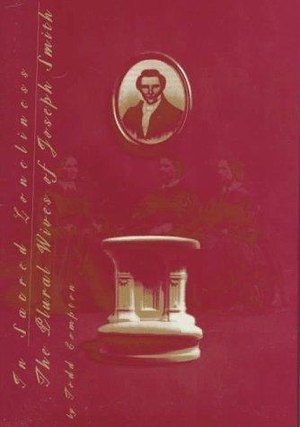
Todd Compton, Signature Books, 1997. A biographical chapter for each of Joseph Smith's plural wives — the book that turned a list of names into a group of people, and still the standard nearly thirty years on.
- The archive
josephsmithspolygamy.org
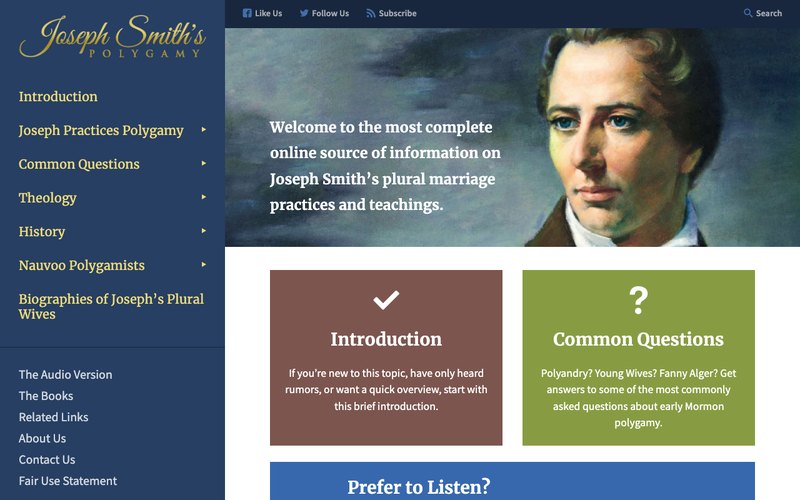
Brian C. Hales put the primary sources in front of anyone with a browser — transcribed, organised by person, free. You do not have to share his conclusions to use what he built, and that is the compliment.
- The podcast
Year of Polygamy
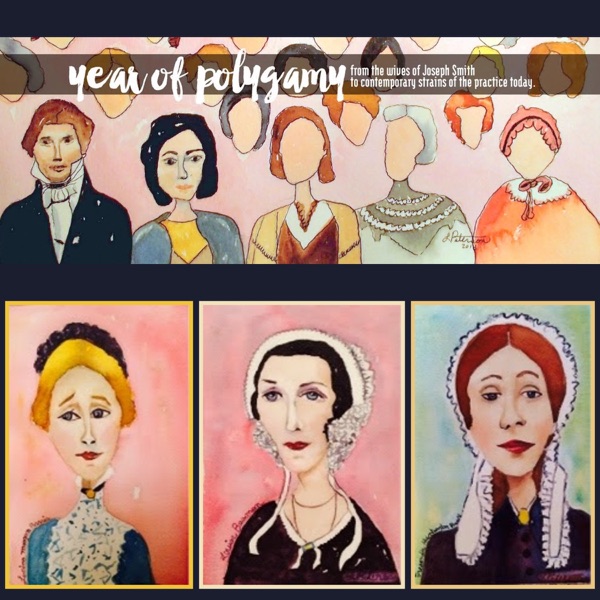
Lindsay Hansen Park, since 2013. Their lives told aloud, one woman one episode, with the sources read out — 190-odd episodes and millions of listeners.
Podcast artwork and the screen capture are reproduced for identification and comment, each linked to its source; all rights remain with their owners. If you would rather we did not use yours, write to mormonstories@gmail.com and it comes down the same day.
If any of this is yours to do, write to us
Not because Brigham Young needs more attention. Because fifty-five women have waited long enough to be heard.
Tell us which of the three you are interested in, and what you have or what you want to make. We are not gatekeeping it: every figure, every source and the whole table are published for anyone to take and use. If you write the book, it is your book.