About
About this site
Brigham Young was sealed or married to fifty-five women. There is no book about them. There is one published list, made in 1987, and it is a table.
This site exists to honour those fifty-five women and to give them back their own voices. That is the whole of it. Everything technical here — the research table, the generated counts, the build that refuses to publish a figure it cannot source — is in service of one idea: that each of these women was a person, and that she is owed the same care a historian would give a man who mattered.
What honouring them actually means
It is easy to say and harder to do, so here is what we hold ourselves to.
Every one of them is named. Not "his wives" — Lucy Ann Decker, Zina Diantha Huntington, Eliza Roxcy Snow, Mary Ann Angell, and fifty-one others. Women who appear on some lists and not others are here too, with the reason for the disagreement.
Each of them gets her own page, built around her rather than around him: where she was born, how old she was, whom she had married before, what children she bore, what happened to her after he died, whether she stayed or left.
Her own words come first where they survive. Fifteen of the fifty-five left anything in their own hand — a diary, letters, an autobiography, a sworn affidavit. Those fifteen voices are the most valuable material on this site, and we quote them rather than paraphrasing them.
The silences are named as losses, not blanks. Forty of these women left no words of their own that we can find. That is not a gap in our research. It is a fact about whose thoughts the nineteenth century bothered to keep, and we say so on every page where it applies rather than quietly moving on. The blanks here are the finding.
We never fill a silence with a guess. Inventing a woman — giving her feelings she never recorded, motives no source supports, a birthplace we would like her to have had — is another way of not listening to her. Where the record stops, this site stops, and says where it stopped.
Brigham Young is on every page, because he is the reason these fifty-five lives are connected to one another at all. But he is the context here. They are the subject.
Where the material comes from
The spine is Jeffery Ogden Johnson, "Determining and Defining 'Wife': The Brigham Young Households", Dialogue: A Journal of Mormon Thought 20:3 (Fall 1987), Table 1 — still the only comprehensive published list. Layered on top of it:
- John G. Turner, Brigham Young: Pioneer Prophet (Harvard, 2012) — the standard modern biography, and the source of the polyandry counts.
- D. Michael Quinn's appendices, for children counts and the will.
- Todd Compton, In Sacred Loneliness for the women also sealed to Joseph Smith.
- Lisle G. Brown, Nauvoo Sealings, Adoptions, and Anointings (Smith-Pettit, 2006) for who received which ordinance on which day.
Everything is on the resources page, and the whole table is published as a workbook, a CSV and JSON for anyone who wants to check it or build on it.
How it is built
Every page is generated from a single research table. Correct one cell and every page that uses it changes. No figure is typed twice, which is why the counts on the home page, the analysis page and the individual entries cannot drift apart — and why the build refuses to publish a count that disagrees with its source.
Three things this site will not do
It will not pick a winner where historians disagree. Turner counts about 53 wives, Johnson 55, Quinn 56. All three appear, with the reason each gives. Every disagreement is listed in full.
It will not fill a gap by inference. "Not established here" means exactly that — not zero, not no, not probably.
It will not tell you what to conclude. It is neither apologetic nor counter-apologetic, takes no position on whether any of this was inspired, and a believing reader should be able to finish every page on it. Where the Church of Jesus Christ of Latter-day Saints has published its own account of something, we link it rather than paraphrasing it.
Corrections
If a fact here is wrong, we want to fix the research table it came from, not just the page. Send the correction and the source to mormonstories@gmail.com and we will.
Who built this
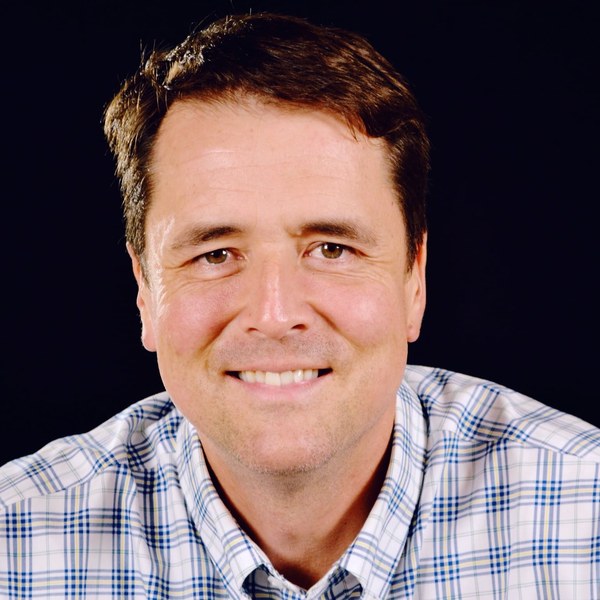
Supplied by John Dehlin.
John Dehlin
Founder, Open Stories Foundation
Founder and host of Mormon Stories Podcast since 2005, and executive director of the Open Stories Foundation. He holds a Ph.D. in clinical and counseling psychology from Utah State University.
He built this site because he kept asking guests on the Brigham Young Podcast for the equivalent of Todd Compton's In Sacred Loneliness for Brigham Young's wives, and kept being told it does not exist. Rather than wait for someone else to write it, he put the research table online and asked for help.
mormonstories.org
Dreamy Collaborators Wishlist: people we hope might get involved
None of the people below has been approached, and none has agreed to
anything.
This site is a prototype. The names, photographs and biographies in this
section are here because each of these people has published work that bears directly on the
fifty-five women, and because we would like them involved in
the book and the podcast we are asking someone to make. Everything
shown is drawn from their own public work and from Open Stories Foundation episode artwork.
Nothing here should be read as endorsement, participation, agreement, or any
association with this site. If you are named here and would rather not be, write to
mormonstories@gmail.com and we will remove you
the same day — no explanation needed.

From his George Mason University faculty page, used with his permission.
John G. Turner not yet approached
Historian, George Mason University
Professor of Religious Studies at George Mason University and author of Brigham Young: Pioneer Prophet (Harvard University Press, 2012) — the standard modern biography, and the book this site leans on most heavily after Johnson's table. He has also written The Mormon Jesus (2016) and Joseph Smith: The Rise and Fall of an American Prophet (Yale, 2025).
Pioneer Prophet has no appendix of wives and prints no list; its only published roster is endnote 56, naming the fifteen women who were legally married to other men. That gap is a large part of why this site was built, and it is not a criticism of the book — a biography is not a reference work, and nobody has written the reference work. He is a frequent guest on the Brigham Young Podcast, which works through the biography chapter by chapter.
George Mason University faculty page · Brigham Young Podcast
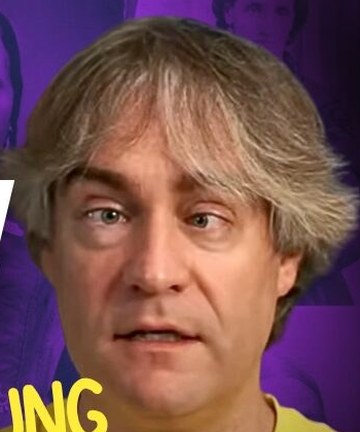
From Open Stories Foundation episode artwork for "Mormon Polygamy Under Brigham Young", where he is named.
Bryan Buchanan not yet approached
Benchmark Books; co-host, Sunstone History Podcast
Co-host of the Sunstone History Podcast and on the staff of Benchmark Books in Salt Lake City. His work sits directly on top of this subject: the evolving history of Latter-day Saint sealings, the second anointing, the William Clayton diaries, and John Taylor's 1886 revelation. A frequent guest on LDS Discussions and Mormon Stories.
His argument that early sealings created dynastic networks and systems of authority rather than the modern "eternal family" is the same reading this site's doctrine page takes of the law of adoption, and he has worked through the primary registers in a way almost nobody else has.
The Messy History of Mormon Sealings · Mormon Polygamy Under Brigham Young · A History of the LDS Second Anointing
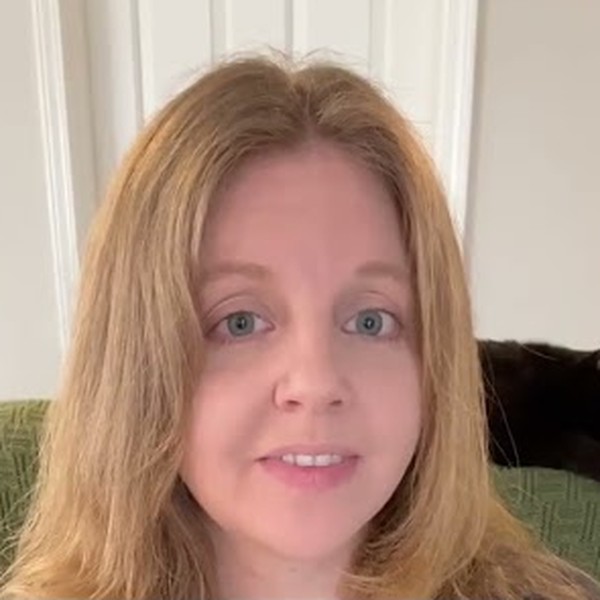
From one of her own videos, used with her permission.
Julia not yet approached
Host, Analyzing Mormonism
Host of Analyzing Mormonism, which examines the life of Joseph Smith and the teachings of the church from the sources. A BYU-Idaho graduate and returned missionary, she is a history master's student at Missouri State University and a regular panelist on LDS Discussions.
Her work on the documentary record of Nauvoo overlaps directly with the first four marriages on this site — the ones Joseph Smith lived to see.
analyzingmormonism.com
We have identified other scholars we would love to collaborate with, but are
holding those names as private for now.
None of these organisations has been approached either.
Their logos appear here to show who we have in mind for a project that does not exist
yet. None has agreed to sponsor, fund, endorse or be associated with this site in any
way. Each logo is the property of the organisation shown and is reproduced only to
identify it. If you represent any of them and would rather not appear, write to
mormonstories@gmail.com and we will take it
down the same day.
Whose project this should be
This site is published by the Open Stories Foundation, the secular non-profit
behind Mormon Stories — but it is not meant to stay an Open Stories project, and it
should not be one.
The work these fifty-five women need is bigger than any one organisation, and most of the
people who can actually do it do not work for us. It wants
Signature Books and Benchmark Books, who between them
published and sell nearly every book this site rests on. It wants
John G. Turner, whose biography is the backbone of the modern account, and
historians like him. It wants the Sunstone Education Foundation, where much of
this scholarship was first argued out loud. It wants archivists, genealogists, descendants holding letters nobody has
read, and a publisher willing to print the result.
So the hope is a collaboration — Signature, Benchmark, Sunstone, Open Stories
and Mormon Stories, Turner and other historians, and anyone else who wants the book, the podcast
and the research archive to exist. We will hand over the table, the code and the domain names
to a better home the day a better home appears. Nothing here is proprietary:
the whole dataset is published for anyone to take and use.
Write to us
Read the full invitation
Site usage is measured with Google Analytics and Microsoft Clarity so we can see
which pages are actually read.